Search This Blog

Wednesday, February 16, 2011

Injustices in Pakistan, Part II: Discrepancies in Federal Employment Including Appointments in Presidency & PM House

By: Aziz Narejo
It is a general feeling in Sindh that the province has suffered injustices in almost every field since the inception of Pakistan – from the days of the first Prime Minister Liaquat Ali Khan to the present PPP led coalition government. Some governments have been outright hostile and hateful to Sindhis while others have not been able to help mitigate injustices due to several reasons.

More disturbing is the fact that the Sindhis never even get a sympathetic hearing from any quarter that matters – especially when there is a PPP government at the center. “But Saaeen, this is your government”, they would be told when complaining about continued injustices against them. We will write in these pages about injustices to Sindh in various sectors with a hope that the rest of the countrymen will listen and add their voice for justice and fairness.

We had published a report in this blog about injustices in the federal employment. This report has more information on the subject and particularly Sindhis’ share in the employment at Presidency and The Prime Minister House.
Part of Cabinet Division, Presidency & Parliament House
A report issued by the Establishment Division as quoted by daily Kawish confirms that appointments have been made in violation of the quota rules in Presidency, Prime Minister’s Secretariat, National Assembly Secretariat and the Senate Secretariat. According to the report there is not a single employee from Sindh Rural in the President’s Principle Secretariat from grades 1 to 16. In the president’s Public Secretariat, there is not a single employee from Sindh Rural in grades 1 to 22.

There is not a single employee from Sindh Rural in Prime Minister’s Internal Secretariat. The report also confirms that there is not a single employee from Sindh Rural in some of the departments working under the ministries of Transport, Culture, Education, Establishment, Environment, Health, Interior, Kashmir Affairs, Labor and Law & Justice and the Planning Commission.
Prime Minister House, Islamabad
According to the Establishment report about the facts and figures of federal employment in year 2009:

There are 341 employees in grades from 1 to 16 in the Prime Minister’s Public Secretariat. Punjab share of the employment is 184 but there are 244 employees from the province.

Sindh Rural share is 41 but there are only 14 employees from Sindh Rural.

Sindh Urban has a share of 27 but there are only 7 employees from Sindh Urban.

Khyber Pakhtoonkhwa share is 42 but there are 50 employees from KP.

Balochistan share is 22 but there are only 3 employees from the province.

There are 58 officers in grades 17 to 22 in the President’s Public and Personal Secretariats. There are 42 officers from Punjab, NONE from Sindh Rural, 3 from Sindh Urban, 4 from KP and 5 from AJK.

There are 167 employees in grades 1 to 16 in the President’s public secretariat. There are 129 from Punjab, 4 from Sindh, 25 from KP, 9 from AJK and NONE from Balochistan!

There are 477 employees in grades 1 to 16 in the President’s personal secretariat. Punjab has 365, Sindh Urban 12, KP has 70, AJK 20, FATA 10 and again NONE from Sindh Rural and NONE from Balochistan!

There are 742 employees in grades 1 to 16 in the National Assembly Secretariat. Instead of its share of 401, Punjab has 544. Sindh Urban share is 60 but it has only 28. Sindh Rural share is 91, it has only 47. Balochistan has a share of 48 but it has only 13 while KP has 81, AJK 18 & FATA 16.

There are 605 employees working in grades 1 to 16 in the Senate Secretariat. Punjab share is 302 but it has 361. Sindh Rural share is 73 but it has only 34. Sindh Urban share is 49 but it has only 21. KP share is 70 but it has 126. Balochistan share is 37 but it has only 20 while there are 27 from AJK & 16 from FATA.

There is not a single employee from Sindh Rural or Urban in grades 1 to 22 in the Civil Service Reforms Unit working under the Establishment Division.

There is not a single employee from Sindh Rural in the Pakistan Environment Protection Agency.

There is not a single employee from Sindh Rural in the National Council for Conservation of Wild Life working under the Pakistan Environment Protection Agency.

There are 1,653 employees in grades 1 to 22 in Pakistan Met. Department. There is not a single employee from Sindh Rural.

Yes, there have always been injustices to Sindh but this is PPP government, which is supposed to give due right to the province.

Figures taken from: http://thekawish.com/home_page/more_news6.htm

Monday, February 14, 2011

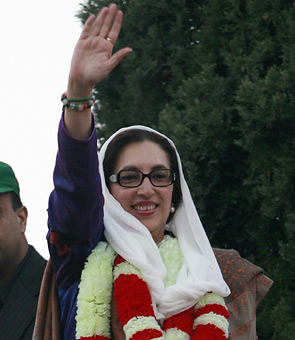
Benazir Murder Case: PPP Government Impedes Investigation, Prosecution

Comment by Aziz Narejo
It is extremely disappointing to see that instead of pursuing vigorously the Benazir Bhutto murder case, the PPP government is making all out efforts to obstruct the investigation into the case and impede a fair trial. It was expected that the PPP government, immediately after coming to power, would order a robust investigation in the case and will forcefully go after the killers of its leader Benazir Bhutto. But as the news reports indicate, it is instead going after the upright investigation officers and the prosecutors who have worked hard to build a strong case.
It was mentioned in an earlier post on this blog that according to news reports, the interior minister Rehman Malik, who is a close confidant of president Zardari, was ‘furious’ over the inclusion of former military dictator Pervez Musharraf’s name in the murder case. He had inquired from the head of the FIA’s Joint Investigation Team as to who had given him permission to include Musharraf’s name in the case. It was feared that the official might soon be sacked.

Reports now say that JIT official Khalid Qureshi has been removed from the position. It is also reported that the government may also sack Chief Prosecutor, Chaudhry Zulfiqar Ali. With the efforts of these two officers the case may have moved in a direction that might have helped the courts to punish the killers and the conspirators. The court had issued summons for Musharraf to appear in the court. Now it is reported that the FIA, on the orders of ‘higher’ authorities have requested the court to stop proceedings against Musharraf.
When contacted by news reporters, Chief Prosecutor Chaudhry Zulfiqar Ali has said that he has not filed that application in the court. It has been done through an Assistant Director of FIA. He said that he has not yet been informed about his removal from the case. He said that he has worked hard on the case and that there was enough material to prosecute Musharraf. He told reporters that if he were removed from the case, he would go public about ‘many facts’ with regards to the Benazir Bhutto murder case.
The present government as well as the main opposition party, PML (N) must understand that to strengthen democracy in the country, it is important to uncover and punish the people responsible for the assassination of PPP leader and former Prime Minister Benazir Bhutto. Not only that but the people responsible for the murders of Baloch leader Akber Bugti and Murtaza Bhutto should also be prosecuted. If it is not done, the democracy in the country would always remain fragile and the so-called establishment would maintain its sway.
It is expected that all pro-democracy political parties, political workers, activists, civil society leadership, writers and intellectuals should press for a genuine effort to prosecute the culprits involved in political murders in the country. 

(Photos taken from internet).

Saturday, February 12, 2011

Notes From My Memory, Part 2: Mir Thebo

Author
The Sann conference, which I mentioned in my last note, was a closed-door meeting. I was in the meeting. During the discussions, Comrade Hyder Bux Jatoi confronted G. M. Syed on the question of feudal lords. Comrade Hyder Bux Jatoi was a friend of G. M. Syed. He was Syed's ally on the national question but he always disagreed with Syed on the question of the feudalism. On the other hand,  Comrade Hyder Bux Jatoi was with ‘the party’ (Communist Party) on the question of the class struggle but he differed with 'the party' on the national question.
G. M. Syed
Comrade Hyder Bux Jatoi had a great and dynamic personality. I had been with him many times. I will try to write on him separately later.
Comrade Hyder Bux Jatoi


Rasool Bux Palijo, Qazi Faiz Mohammad, Shaikh Ayaz and Mohammad Ibrahim Joyo sided with G. M. Syed on the question of feudal lords’ inclusion in the democratic movement. We, in the left, were caught in a difficult situation. We were against feudalism but ‘the party’ needed G. M. Syed in the democratic movement. We didn’t want to be isolated.
Rasool Bux Palijo

Later, when feudal lords thought that Syed was going to be the future leader of Sindh, they started coming to him. G. M. Syed thought it was the right moment and took a decision to form a broader anti One Unit front. He called for a preparatory committee meeting to be held at Keenjhar Lake to finalize arrangements in that regards.
Mohammad Ayub Khuhro
But another event took place before the Keenjhar meeting that created a storm. News came to us that Mohammad Ayub Khuhro and Pir Ali Mohammad Rashdi were to join the front too along with other landlords. This was the break up point with Syed for ‘the party’. Jam Saqi and I talked to G. M. Syed about the matter. Agha Ghulam Nabi Pathan was also present during that meeting. Syed tried to convince us that big landlords were necessary to win the elections. (Z. A. Bhutto did the same thing later. He took all the feudal lords in his party).
Pir Ali Mohammad Rashdi

We threatened that ‘the party’ will not join the front if they will be taken in. Syed, after a brief moment, replied softly that, "I’ll take all of them”. Then Agha Ghulam Nabi Pathan also tried to convince us but we couldn’t agree as ‘the party’ had already taken the decision not to join hands with the feudal lords. So we broke with Syed. It was a sad moment for Sindh and for the left. Rasool Bux Palijo, Shaikh Ayaz and Mohammad Ibrahim Joyo remained with Syed. Although after sometime, Palijo also left the United Front.
A view of the Keenjhar Lake, near Thatta
Anyway, all the landlords came to G. M. Syed including Jatois, Makhdooms, Wassan, Pirs and Syeds. In the evening, after the meeting came to a close, there was a musical program arranged by Rais Karim Bux Nizamani. He was a great fan of Syed. He had a colorful personality. He was a romantic person with great sense of humor. He drank a lot and was fond of music with great knowledge about it and had a fair voice quality too. He had brought some musical instruments with him for the program. When he sang Shaikh Ayaz’s ‘Keenjhar Kinara, Asaara Asaara’, I became gloomy and Syed wept silently. I was always curious to know why Syed would cry on such moments. Sometimes he would cry when he expressed some sad situation about Sindh.
Yousuf Laghari

In the follow up to the Keenjhar meeting, a big gathering of almost all the landlords of Sindh was held at the Makhdoom House in Hyderabad, Sindh. A large number of activists and leaders also attended that meeting. A firebrand speaker and a student leader, Yousuf Laghari (he was not in ‘the party’ but he was a friend of ‘the party’) came to the stage and severely criticized the arrogant feudal lords. He said that these were the same people who supported One Unit Bill and they will betray again. He said that they were not friends of Sindh.
After his speech, some of the feudal lords came to the stage and apologized in front of the public. Only two feudal lords were furious: Ghulam Mohammad Wassan from Sanghar and Abdul Hamid Jatoi from Dadu. They denied the allegation and claimed with pride that they had opposed One Unit from the beginning and didn't vote for it. The formation of Sindh United Front was announced at the meeting to work against One Unit and actively participate in the politics in Sindh.


Z. A. Bhutto at a rally
Then a very big factor came into politics, like a tidal wave that would wash away all the old ways the politics was done. It was Z. A. Bhutto. After his resignation from Gen Ayub Khan's cabinet as a foreign minister, he challenged all: the right, the left, the democrats and even the nationalists. In the beginning, he didn't oppose G. M. Syed. He went to Sann to meet Syed for his support and to show respect, he called Syed as uncle. But Syed had only one question: Sindh! And a demand to oppose One Unit!

Soon Syed would be alone, as all the feudal lords would leave him and join Bhutto because they sensed that it was Z. A. Bhutto who would come to power and not G. M. Syed!
Z. A. Bhutto with some Sindh politicians

Continued …

(Read about the politics of G. M. Syed and Z. A. Bhutto in next installments).

Friday, February 11, 2011

End of Mubarak's 30-Year Rule Heralds a New Era for Egypt, Arab World & Iran

Jubilation in the Tahrir Square, Cairo
Hosni Mubarak is gone! Good riddance! At age 82, after ruling Egypt with heavy hand for 30 years, the people of Egypt and the Egyptian military finally pushed him out of the presidential palace Friday evening, February 11, 2011. A historic day indeed!
Fallen dictator, Hosni Mubarak
Mubarak was appointed as Vice President by another military man turned dictator, Anwar Sadat in 1975. He became president of Egypt in 1981 after the assassination of Sadat. According to Wikipedia, “the length of his presidency made him Egypt's longest-serving ruler since Muhammad Ali Pasha. Before he entered politics, Mubarak was a career officer in the Egyptian Air Force, serving as its commander from 1972 to 1975“.
King Farouk
The 18-day protest turned into a huge party in Tahrir Square in Cairo & elsewhere in Egypt as visibly shaken Vice President Omar Suleiman announced Mubarak's resignation. As the news came, the Tahrir Square in downtown Cairo and the whole country exploded with jubilation. The people had finally won!

Anwar Sadat
It is big one for Egypt and the whole Arab world as Egypt occupies an important place in the Middle East and is considered to be a trend setter in the region. It is no less than a political earthquake with its center at Tahrir Square. Many autocrats, dictators and kings will not be sleeping easy from now onwards in the Arab world and Iran.
Muhammad Naguib

Mubarak handed over the power to the “Supreme Council of the Armed Forces”. It will be led by Defense Minister Mohamed Hussein Tantawi. Egyptian military has long history of ruling the country. All its recent rulers from Muhammad Naguib (he took over as president in 1953 after the 1952 Egyptian Revolution overthrowing Muhammad Ali Dynasty of Egypt and Sudan) to Mubarak came from military. The other two rulers were Gamal Abdel Nasser and Anwar Sadat.
Gamal Abdel Nasser
Now the power is again transferred to the military. But there is a hope this time that the present Revolution will lead to genuine, free & fair elections and establish a true democratic government. Power to the people! Long Live Egyptian Revolution!
Mohamed Hussein Tantawi

Wednesday, February 9, 2011

Karachi Tops in Crimes in Sindh

By Nasir Aijaz
Courtesy PPI, a file photo
Karachi, Sindh, Pakistan: The crime rate shot up in Sindh, mainly in Karachi, during 2010 as 100,278 crimes of different nature were reported from January 01 to December 31 last year across the province as compared to 90,562 in 2009 showing an increase of 9,716 crimes.

The increase registered mainly in Karachi, as 58,746 crimes were reported here in 2010 as compared to 49,469 in 2009 showing an increase of 9,277 while 21,838 crimes were reported in Hyderabad region in 2010 as compared to 22,541during 2009 showing a decline of 703. In Sukkur region, the number of crimes during 2010 was 19,694 as compared to 19,958 in 2009 with slight increase of 264, according to official statistics.

The data shows that 1,482 murder cases were reported during the year under report as compared to 1,083 in 2009 in Karachi showing an increase of 399 while in Hyderabad region, 724 murder cases were reported in 2010 and 579 in 2009 with an increase of 145 and in Sukkur region, there was an increase of only 11 as 1,083 murder cases were registered during 2010 as compared to 1072 in 2009. These figures show that 3,289 murder cases took place across the province in 2010 as compared to 2,734 in 2009 showing an increase of 555.

Attempt to murder cases also registered increase as 4,125 such cases took place in Sindh during 2010 as compared to 3,874 in 2009 showing an increase of 251. In Karachi 1,250 cases were registered in 2010 and 1,034 in 2009 with increase of 216. In Hyderabad region number of such cases in 2010 was 1,701 and 1,637 in 2009 with an increase of 64 while in Sukkur region attempt to murder cases declined by 29 as 1,174 cases were registered in 2010 compared to 1,203 in 2009. 
Hyderabad, Sindh: Market Tower (taken from internet)
According to data, kidnapping for ransom cases declined by 23 in the province as 175 kidnappings took place in 2010 and 198 in 2009. The Karachi however topped as 76 kidnapping for ransom cases registered in 2010 compared to 73 in 2009 with slight increase of three cases. In Hyderabad, the kidnappings declined from 28 of 2009 to 23 in 2010 and in Sukkur too it declined from 97 of 2009 to 76 in 2010.

The official statistics show decline of 18 cases of dacoity in Sindh as 1,809 such cases reported in 2010 and 1,827 in 2009. The Sukkur region topped in dacoity cases despite a decline as 845 incidents were reported in 2010 and 1,009 in 2009 showing decrease of 164 cases. Hyderabad region ranked second with 580 dacoities in 2010 and 479 in 2009 with an increase of 101. The dacoities increased in Karachi by 45 where 384 cases were reported in 2010 and 339 in 2009.

Karachi ranked first in robberies as 3,145 such cases were registered in 2010 compared to 3,070 in 2009 showing increase of 75 cases. In Hyderabad region, the robberies increased by 149 from 776 in 2009 to 925 in 2010. Sukkur region registered increase of 06 cases from 581 of 2009 to 587 in 2010. The overall increase in robberies in Sindh was 230 from 4,427 in 2009 to 4,657 in 2010. 
Indus River, Sukkur
Karachi again topped in car snatching/theft cases despite claimed decline of 124 cases. The report says that a total of 2,073 vehicles were stolen/snatched (1,419 stolen, 654 snatched) in 2010 compared to 2,197 (1,533 stolen, 664 snatched) in 2009 in Karachi. Such cases increased by 27 in Hyderabad region as 310 (175 stolen, 135 snatch) in 2010 compared to 283 (179 stolen, 104 snatched) in 2009. These cases declined by 15 in Sukkur region as 194 (94 stolen, 100 snatched) in 2010 compared to 209 (112 stolen, 97 snatched) in 2009. A total of 2,577 cases of four-wheelers (1,688 stolen, 889 snatched) took place in 2010 and 2,689 (1,824 stolen, 865 snatched) in 2009 showing decline of 112.

There was a big jump of 1,151 cases in bike snatching/theft across the province as 8,362 (5,799 theft, 2,563 snatching) cases were reported in 2010 and 7,211 (4,895 theft, 2,316 snatching) cases in 2009. Karachi topped with increase of 915 cases as a total of 6,925 (5,221 theft, 1,704 snatching) incidents took place in 2010 compared to 6,010 (4,406 theft, 1,604 snatching) in 2009. Hyderabad region registered increase of 148 cases from 630 (theft 344, snatching 286) in 2009 to 778 (theft 393, snatching 385) in 2010. There was also an increase of 88 cases in Sukkur region where 659 (185 theft, 474 snatching) cases registered in 2010 compared to 571 (145 theft, 426 snatching) in 2009.

Benazir Murder Case: Rehman Malik Comes to Musharraf' Rescue?

Federal interior minister and president Zardari’s close associate, Rehman Malik is reported to have sprung into action to get the name of former military dictator, Pervez Musharraf deleted from the list of the accused in the assassination of former prime minister & PPP chairperson Benazir Bhutto.

According to some news reports, Rehman Malik has expressed his anger over the inclusion of former dictator’s name in the list of the accused and has inquired from the head of the Joint Investigation Team of FIA, as to who had given permission to the investigators to include Pervez Musharraf’s name in the list of the accused in the case. He is reported to be putting pressure on the head of the Joint Investigation Team of FIA to delete the ex-dictator’s name.

It may be recalled that the Federal Investigation Agency on Monday had submitted a fresh 57-page report in the Anti-Terrorism Court-III in Rawalpindi, declaring former president Pervez Musharraf as an accused in the Benazir Bhutto assassination case.

As reported in the press, FIA’s Special Public Prosecutor Chaudhry Zulfiqar Ali had said in the court that investigators, while reinvestigating the case, had tried time and again to contact the former ‘president’ for questioning him but he did not respond. He said that the FIA had mentioned him as an absconder in the fifth interim investigation report.

According to the news reports, the Joint Investigation Team of FIA had tagged statements of former intelligence bureau chief Ijaz Shah and former director general of the crisis management cell of the Ministry of Interior Brig (retd) Javaid Iqbal Cheema with the report.

They said the investigators had also attached an email sent by Musharraf to Ms Bhutto saying that her security depended on the nature of her relations with him.

The email is being considered as a threat hurled by Musharraf.

The investigators have also submitted a letter written by Ms Benazir to Mark Siegel, a foreign journalist, saying she felt threatened from Mr. Musharraf, former Punjab chief minister Pervaiz Ellahi and Ijaz Shah.

The present coalition government led by PPP has been accused of dilly-dallying the investigations into the murder of its leader. The government first delayed to start any investigations in the case and insisted on UN probe in the assassination. When the UN probe report was disclosed, the government raised objections over it apparently at the bid of the military chief. 


Now when an upright investigation officer has presented a report including the name of former dictator in the list of the accused, the confidant of the president is said to have come to the rescue of Pervez Musharraf. Since Rehman Malik is considered to be president Zardari’s right-hand man, it is impossible to think that he is taking action in this case without president’s nod.

Monday, February 7, 2011

Injustices in Pakistan: Startling Disclosures of Federal Employment Figures

Federal Secretariat, Islamabad
 By Aziz Narejo

Sindhis and Baloch have been complaining about injustices to them since the inception of Pakistan. Be it the distribution of resources, apportionment in budget, provincial autonomy, water rights, share in economic development, expenditure in social sectors, education, health and infrastructure development, their involvement in the decision making process or their share in the military, the most powerful institution in the country, they are ignored everywhere. Their cries are never heard or even noticed at the highest levels.

It is even more unfortunate that the so-called human rights advocates, champions of the civil society, the ‘democratic forces’ and others proclaiming to be on the side of fairness in society also always ignore the voices from Sindh and Balochistan. After losing all the hope for any positive change, Baloch have finally decided to part ways with Pakistan. If it continues, Sindhis may have to make a decision too.

Just look at the figures disclosed by a large NGO, SGA in Islamabad today about the employment in federal government departments and federally controlled corporations and semi-government organizations. It may not be startling for Sindhis and Baloch but it should be an eye-opener for fair-minded people in Pakistan who should seriously consider how to respond to these injustices in just one sector of the society. These figures don’t include employment in military and their budget.

Injustices in the federal government employment sector:

Number of federal employees in 2009-2010: 447,155

Sindh rural share 50,976 (11.4%); they get 22,452; which is 28,524 less than their share

Sindh urban share 33,537 (7.6%); they get 40,006; which is 6,469 more than their share

Punjab share 223,578 (50%); they get 206,202; which is 17,376 less than their share

Khyber Pakhtunkhwa share 51,423 (11.5%); they get 124,668; which is 73,245 more than their share

Balochistan share 26,829 (6%); they get 19,092; which is 7,737 less than their share

AJK share 8,943 (2%); they get 4,922; which is 4,021 less than their share

Gilgit-Baltistan, FATA share 17,886 (4%); they get 29,812; which is 11,926 more than their share

Corporations, semi-govt. organizations:

Number of employees: 338,702

Punjab share 169,351 (50%); they get 184,653;  which is 15,302 more than their share

Sindh rural share 38,612 (11.4); they get 31,819; which is 6,793 less than its share

Sindh urban 25,403 (7.6%); they get 46,383; which is 20,980 more than their share

Khyber Pakhtunkhwa share 38,951 (11.5%); get 51,194; which is 12,243 more than their share

Balochistan share 20,322 (6%); they get 14,557; which is 5,765 less than their share

In total:

Sindh rural has 35,317 less employees

Sindh urban has 27,449 more employees

Khyber Pakhtunkhwa has 85,488 more employees

Balochistan has 13,492 less employees

Open your eyes before it is too late! Will you?

(Source of the figures: daily Kawish, 7 Feb. 2011)


Sunday, February 6, 2011

Notes From My Memory: Mir Thebo

Author, Mir Thebo
About me:

I was born in the undivided India, under the Birtish Raj, 6 months before the creation of God's country, Pakistan, in a little village, Ghari of Dadu district to a small landlord and a Sindhi writer Badam Natawan. I went to school in Shikarpur and did my masters from Sindh University in Political Science. I m not a writer but got this little gift from my mother and read lot of classic literature by authors like Dostoyevsky, Tolstoy, Franz Kafka, Victor Hugo, Rousseau, Balzac, Hermann Hesse, Sartre, Camus, Virginia Wolf, Hemingway and some others. Although these writers don’t make you a revolutionary, they can make you a humanist, romantic, aesthetic or someone who could be anti war or feels for the sufferings of fellow human beings. 
Renowned writer Ms Badam Natawan

It was my landlord father’s continuous fights with his writer wife who pushed me to the revolutionary ideas. I became a leftist with little bit nationalist feelings and joined the democratic left movement. I was sent behind the bars three times and punished by summary military courts. I started writing actually after dacoits kidnapped me for ransom. I wrote a graphic account about the life with them. It became popular and I started writing on other issues.

I left politics after that and became a free man. I like reading, writing, listening to music, having drinks with friends and indulge in some gossip. I like vagabond and bohemian way of life though here in America, I work just to live. But I like homeless and hippy people here. I love Sindh very much but not at the cost of my life. You may call me a pseudo lover of Sindh. I love this land, America too, a clean and beautiful country, which allowed me to live a better life.

The idea of writing these notes popped up when I wrote few lines on G. M. Syed on 15th January this year. There was a gathering in Houston, TX on 16th January to celebrate G. M. Syed’s birth anniversary. I was invited to attend but couldn’t go, as Saturdays are busy at my work and couldn’t take a day off.  When some friends read my note that day, they insisted that I write more on G. M. Syed. In the next few days, I wrote some more notes, which will be serialized here. Since I am at it, I’ll write on some more personalities and events in the coming days for Indus Herald.  
G. M. Syed, explaining a point

I like G. M. Syed but not his fanatic followers because if you differ with them even slightly, they will consider you an enemy of Syed and Sindh. I have few memories of G. M. SYED and his politics that I can share with you.

According to Wikipedia, G. M. Syed was a political leader who pioneered the Jeay Sindh movement for the freedom of Sindh from Pakistan. He is regarded as one of the founding fathers of modern Sindhi nationalism. In 1930 he founded the Sindh Hari Committee, later led by Hyder Bux Jatoi.

In the days to come, I will share with you my memories of events and personalities, and sometimes my views of them, from the years 1960s to 1990s.

I must confess, I am neither a master of eloquence nor have the quality of expressiveness and really don’t know where to start. I’ll write down whatever comes to my mind of those years.
Gen. Ayub Khan, who took over in 1958

My memories go back to 1960s. During that whole decade, the country suffered under the dictatorship of Gen. Ayub Khan. All the political activities were banned and newspapers were censored. There was complete silence. The party (Communist Party) decided to break the political silence and approached G. M. Syed. At that time he was friend of the party. There was trust between the two.


G. M. Syed and the party decided to form Bazm-e-Sufiya-e-Sindh. It was apparently a non-political organization but it included mostly political activists. The first meeting of the organization was held at Besant hall in Hyderabad, Sindh. (See photo at the bottom). Mohammad Ibrahim Joyo and Shaikh Ayaz also participated. There were some other Syeds present at the meeting besides G. M. Syed. One party worker criticized G. M. Syed for that and accused him that he was again taking the people to Syeds and landlords. Syed is very famous for his anger but he was very cool at that time and very politely convinced the comrade that the “Bazm” was not a political platform. I found him a good tactician who could handle a difficult situation.

After some political relaxation came and fear from Ayub Khan subsided, many politicians from Sindh gathered around G. M. Syed and nationalism became a dominant trend. Syed called a big conference at his hometown, Sann. A large number of political workers, student activists, peasants, writers, poets and intellectuals like Shaikh Ayaz, Tanvir Abbasi and Mohammad Ibrahim Joyo and others participated. Many feudal lords were also present at the conference.

Continued …

Besant Hall, Hyderabad, Sindh
It was established in February 1901 by Theosophical Society. It was named after Ms. Annie Wood Besant who was a prominent Theosophist, women's rights activist, writer and orator.


Saturday, February 5, 2011

Sindh Diary

by Dastgir Bhatti

 … the general impression about the governance in Sindh is not only extremely negative, but such conditions have generated unemployment, greed, crime, loot and plunder of state lands, disregard for merit and fair play.

HYDERABAD, February 5: Dozens of flood-affected villagers belonging to Shahdadkot district's various villages marched alongside their womenfolk for over 70 kilometers during last couple of days and finally reached on Friday at the mausoleum of their Shaheed leader Benazir Bhutto and protested against the apathy of the authorities, which have miserably failed in the task of their rehabilitation.

This symbolic demonstration in Gharhi Khuda Bux actually depicts the plight of millions spread along the banks of Indus uprooted last year by the devastating floods, which rendered them not only shelterless but washed away their crops, cattle and almost everything they possessed. Right from Jacobabad in the north to Thatta on the shores of Arabian Sea, the flood-hit people are facing hunger, disease and deaths of their dear ones.

The apathy of the authorities under Chief Minister Sindh Syed Qaim Ali Shah's administration is unparalleled as these millions are rotting for food, reconstruction of their homes, seeds and fertilizer for cultivation of new crops but to no avail.
 

Hence, yesterday's march. The protesters did gather at the mazar of Shaheed Benazir but did not make any appeal to the government, they instead drew attention of the Chief Justice of Pakistan with the request to order an inquiry as to which powerful politicians in various places have deprived them of their due share in the aid package and the so called Watan Card.
"Since the Sindh Government is not listening to our voice, we decided to long-march up to the mazar of our leader, record our protest and make a request to the honourable chief justice Iftikhar Muhammad Chaudhry to come to our rescue," commented Ghulam Sarwar Sarki, a well-to-do landowner now turned pauper.

He complained of massive bungling in the supply of the seeds, fertilizer and even Watan Card, accusing that a majority of the rightful affectees have been denied these essentials and local influentials and party high-ups have cheated the common folk.

Apart from the plight of the flood-affected people, the whole province of Sindh is beset with complete breakdown of law and order, daylight robberies, kidnapping for ransom, Karo-Kari killings, unmatched nepotism, rampant corruption in revenue, police and almost all other departments of the provincial as well as the federal government.

Another major issue hitting the headlines is the bulk re-employment of retired employees, some of who have contrived to get five years of extension in their service, which is unheard of, and without precedent in our bureaucratic history. These crony-like officers range from grades 17 to 21. For instance, the Director Generals of three major organizations namely, Lyari Development Authority, Malir Development Authority, Lyari Expressway and Project Director, Bhitshah had retired some 3 to 5 years ago.

They remained blue-eyed boys of General Musharraf and former Prime Minister Shaukat Aziz also and now are enjoying the same lubricant positions under PPP government. The magnetic pull these bureaucrats possess might have pleased our rulers, but the people of Lyari and Malir have been thrown at the mercy of the land mafias, which are obviously sheltered and protected by our police bosses.

Hence, the general impression about the governance in Sindh is not only extremely negative, but such conditions have generated unemployment, greed, crime, loot and plunder of state lands, disregard for merit and fair play.

Pointing finger at the judiciary's intervention or intrusion may be easier for our politicians but their rude behaviour with the voters specially after the martyrdom of Benazir Bhutto, has weekend the ruling PPP's foundation in its own home province. Had the administration sincerely and seriously attempted to resolve the day to day problems of the poor, the people will not need invite the attention of the judges towards the injustices meted out to them at the hands of their elected representatives, the powerful feudals and the ruthless police force.

It’s a conventional wisdom that perception is always stronger than reality. So the common perception about our politicians, specially the ruling party leaders is fast creating inaccessibility and annoyance as its corollary among the masses. The talk of the town is, "if you go for work to Karachi, you will get killed by the urban terrorists or target killers and when you want to live in peace in the interior of Sindh, your life will be ruined by dacoits and kidnappers".

It will be in the fitness of the social conditions, that certain bold steps are initiated by the PPP stalwarts at the provincial level to arrest the looming despondency and disillusionment which now writ large on the faces of our poor. The PPP's sole asset has been the common man's blind faith in leadership of the Bhutto family. President Asif Ali Zardari, who has inherited the mantle of this great leadership, must not fear the parallel force of the establishment because he can attract millions of poor folk's goodwill through meaningful reforms and schemes of public welfare.

When President Zardari grumbles about parallel or shadow government run by the establishment, always eager to topple the elected democratic regime, he perhaps overlooks the facts that the times have changed and any establishment, howsoever powerful, can not dare to interfere directly, as long as the elected authority commands popular support and that kind of public backing can be regained with sincere and honest reforms to address the basic socio-economic problems of the toiling millions.

Drawing an analogy, the history will judge President Hosni Mubarak of Egypt as culpable for giving room for maneuver for the downfall of his regime.

Friday, February 4, 2011

Governor Salman Taseer's Assassination & the Rising Tide of Fanaticism in Pakistan

By Ahmed Chandio

The assassination of Punjab Governor Salman Taseer has spread fear and terror among people. A killer has been made hero and the victim as a villain in the name of blasphemy law. Religious parties of the country have intensified their activities in the wake of the                 Governor's assassination. They don't care about the country's image abroad and the cost anyway. People are not ready to discuss the issue of blasphemy saying it's a sensitive issue.

Lawyers of Rawalpindi forced a judge of an anti-terrorism court not to leave for the capital to hear the case. Finally, police shifted the accused to Rawalpindi to present him before the judge. Lawyers and activists of some religious parties placed garlands of roses around the killer's neck. They showered him with flower petals and kissed him. According to a PPP minister, lawyers who garlanded the killer belonged to the PML-N.

Over 300 lawyers signed legal documents expressing their willingness to defend the killer. But no public prosecutor came forward to plead the case of the assassinated governor because of fear.

One newspaper reported that Qadri was a mercenary killer and paid to carry out the murder. He was given an assurance that his family would be looked after if anything happened to him or if he was convicted. Sources said announcements had been made about bounty to be paid to the killer and the amount offered totaled Rs40 million.

The Punjab governor's murder is seen as an act of religious fanaticism. The roots of the menace can be traced back to the Zia era. Earlier it was considered that madressahs (religious seminaries) served as breeding grounds for producing fanatics. But profiles of 9/11 terrorists, Times Square bomber, the killer of journalist Daniel Pearl proved that all of them had not studied in madressahs. The killer of Punjab governor had also not studied in madressah.

Can we hold curriculum being taught from primary to university-level education in Pakistan responsible for terrorism? No. Ahmed Omar Saeed Sheikh, the killer of Daniel Pearl, had studied in the London School of Economics.

Then what instigated them to be a fanatic? What are sources and forces of hate in Pakistan?

There has been no doubt that hate missions are very much institutionalized and billions of rupees are spent on them. Some foreign countries are also funding millions of rupees to groups involved in acts of militancy.

There are parties openly propagating extremist ideology of Abdul Wahab of Saudi Arabia. There are parties, which display photos of Khomeini of Iran in their processions and public meetings. They give preference to violence over dialogue to further their agendas.


Wahabi-leaning religious parties are getting funding from Saudi Arabia and some Shia parties from Iran. Then they must be loyal to countries from where they are getting money.

There are no militant and terrorist groups in Saudi Arabia. No one is tolerated to bear arms in Iran other than the Iranian army. Then why such groups have been allowed to operate in Pakistan since the country's Constitution does not allow armed groups other than the Pakistan Army?

According to some analysts, the security establishment considers jihadis their assets. The establishment wants to use them for bargaining with the USA, Afghanistan and India. The fundamentalist can easily be used to destabilize civilian governments.

Thousands of foreign militants have also taken refuge in Pakistan. The nexus between non-state armed groups and religious parties is now open secret. There is no difference between the agenda of Al Quad and religious parties. Al Quad is anti-democracy and wants to replace ‘westernized’ systems through jihad. Pakistan’s religious parties always opt for short cuts and work as B teams of martial laws.

Al Qaeda believes in bullet and religious parties have also formed their militias to implement their agenda. Sunnis and Shias have their own militias. They occasionally use their weapons and kill people belonging to other sects. The religious fundamentalism has virtually taken over Pakistan. The country can expect serious consequences if the monster of extremism is not addressed on a priority basis. 

Tuesday, February 1, 2011

Desertification, natural calamities feared in world’s 4th biggest Desert Thar as Gugral trees drying up due to illegal extraction of resin


By Nasir Aijaz 


Nagarparkar, Sindh, Pakistan, Feb. 01:  Like every year, this winter too hundreds of kilograms of gum, illegally extracted from Camphora Mukal, the gum-producing trees, locally known as Gugral, by using poisonous chemical, were transported in trucks to Karachi, as the conservators of forests and wildlife in Nagarparkar area of South-Eastern Tharparkar district of Sindh province, one of the Ramsar sites, remained in traditional deep slumber.    

None of the agencies stop these trucks and seize the illegally transported gum (resin) at the check-posts established in Thar Desert or at any other district throughout their 500km journey from Nagarparkar to Karachi, as the persons involved in this trade are influential who get the gum extracted through the hired local people.

Even the Pakistan Rangers, a paramilitary force, which has setup its check-posts in 100km area from Islamkot town to Nagarparkar turning it into a cantonment where nobody could enter or leave without its permission, have failed to stop this illegal trade. The Rangers’ presence is mainly being the area bordering India besides vast coal reserves found in Thar Desert near Islamkot. 


This illegal trade started back in nineties and since then continues in connivance of officials of concerned departments, as the local social workers and environmentalists allege. “The district administration imposes ban under Section 144 on chopping of trees and illegal extraction of gum but that ban is effective only for seven days, a very brief period, which ends by the time notification reaches to the concerned officials for implementation,” Bharumal, coordinator of Society for Conservation & Protection of Environment (SCOPE) told.

The Nagarparkar area, having Karonjhar Mountain, spread over 16 miles, had thousands of lush and green Gugral trees, which increased beauty of the area besides providing fodder to the goats and other livestock, but now seventy percent of the trees have dried up, Salim Khoso, a local journalist, told.

“The Gugral tree, loved for its aroma during the rainy season, dries within six months after the resin is extracted by using poisonous chemical through cuts made with axes,” he added.

Salim Khoso told that since the tree bears resin in winter, this season suits the illegal traders who start their activities in December every year continuing till April. “The resin, traditionally used in Jain and Hindu temples for its aromatic peculiarity, is also used in medicines, cement and manufacturing the audio and video cassettes as well,” he added.

The gum is sold in Karachi at the rate of PKR.30, 000/- to PKR.40, 000/- (USD 353 to 470) per 40kg, which has made it a lucrative business for the local influential people, he said.

Tanveer Arif, the CEO of SCOPE, also expressed concern on illegal trade of extracting gum, and said his organization had been raising voice against it at different forums but all in vain. “These illegal activities are harming the biodiversity in the area, which has been protected by the laws of the country. If the Gugral trees continued drying up with this pace, it would speed up desertification and ultimately would cause natural calamity.

The SCOPE had also been raising awareness about the importance of Gugral among the local people and in this regard had organized a colorful Rakhi Bandhan festival last year during which the hundreds of women tied Rakhis (strip of cloth) to the Gugral trees declaring them ‘brothers’, Bharumal told adding that a number of non-government organizations had formed an alliance to launch joint struggle against the Mafia.         

He said Tharparkar is one of the five famous eco-ranges of Pakistan but surprisingly Sindh Environment Protection Agency, Forest and Wildlife departments etc. are indifferent to saving this area which was to be declared as National Park.   

IUCN, an international organization working on the environment, has enlisted the Gugral shrub, about 4 to 6ft height, in Red Data List. The Gugral tree in 2sq km area yields 100-120 Maund (1 Maund=40kg) resin weekly. Since the tree releases resin normally in small quantities, the chemicals are used to extract it in bigger quantities. 
 The author